
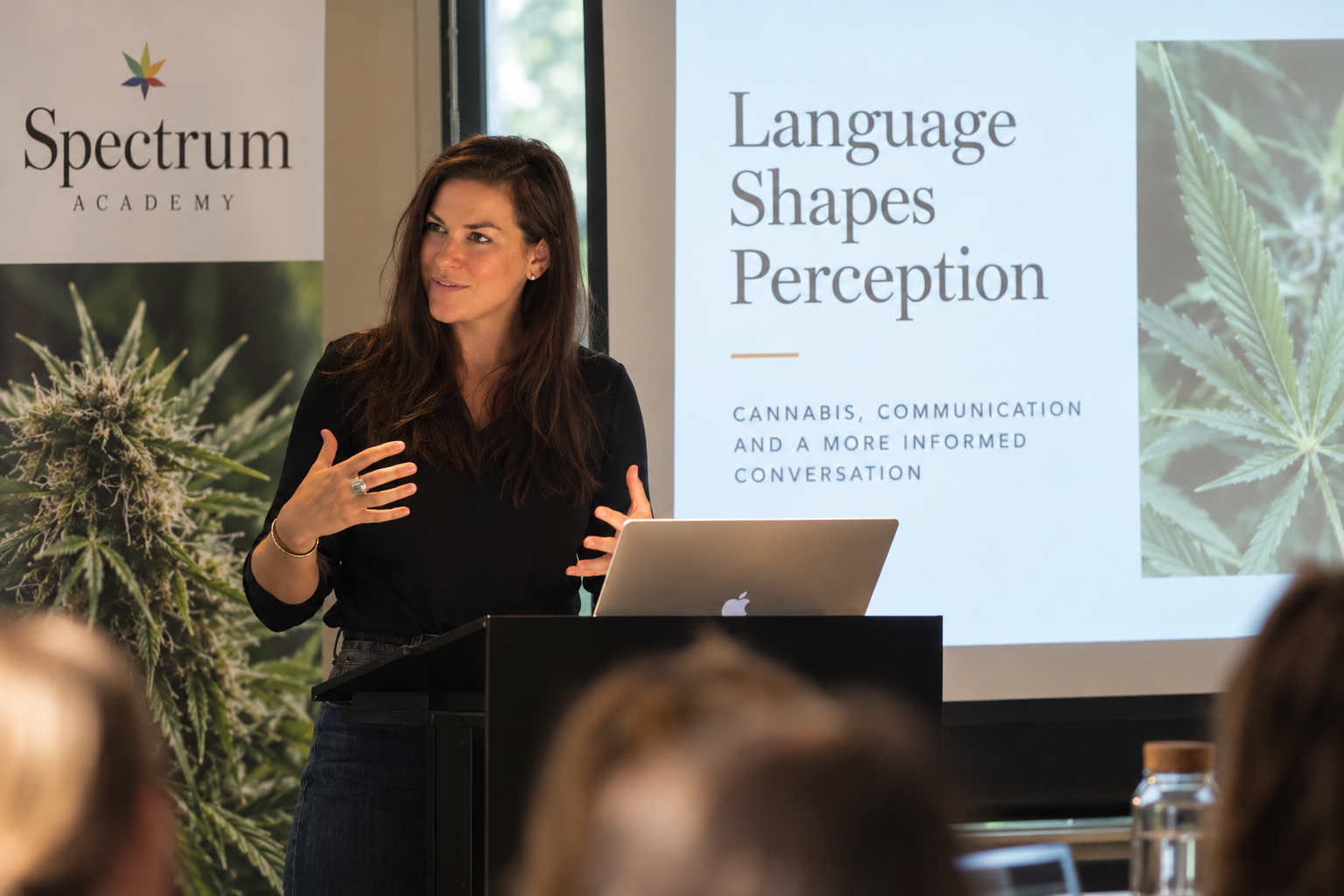
In 2019, I was preparing a presentation about language and communication in the medical cannabis industry. The audience was international and exclusively medical. The events spanned several days and were hosted by Spectrum Academy, an educational initiative associated with one of the biggest names in Canadian cannabis at the time. The organization had assembled leading voices in medical cannabis research, clinical practice, patient activism and advocacy. To be invited to participate alongside them was deeply humbling.
At the time, cannabis was undergoing a remarkable transformation in Canada. Legislation had changed, businesses were emerging, and medical professionals were navigating an increasingly complicated conversation with patients. But the vocabulary surrounding the plant still carried decades of cultural baggage. We had a remarkable number of words for cannabis. Weed. Pot. Grass. Reefer. Marijuana, spelled more than one way. They all seemed to describe the same thing, but they didn't necessarily communicate the same meaning. And when you're trying to establish credibility for a subject that's been misunderstood, politicized and stigmatized for generations, that distinction matters.
Preparing that presentation reinforced something I've carried into my copywriting career ever since: Words don't simply describe how we understand things; they help shape that understanding.
The challenge isn't always finding a more persuasive way to say something. Sometimes it's recognizing what our choice of language communicates before we've even made our point. Using the word cannabis was a deliberate move toward destigmatization and normalization. Slang, meanwhile, could communicate any number of things, from a deep-seated love of the plant to outright disdain. Same plant. Different words. And the words you choose drive entirely different conversations.
When language becomes a barrier to understanding
One of the most interesting parts of preparing that presentation was examining how terminology changes our perception of the people being described. Consider the difference between calling someone a cannabis user and a patient using cannabinoid-based medicine.
Neither description necessarily tells us everything we need to know about the individual. But each invites a different set of assumptions. The first may conjure images shaped by decades of popular culture, political rhetoric and recreational cannabis use. The second places the individual in a medical context, where treatment, evidence and patient care become central to the conversation.
The distinction becomes particularly consequential when the audience includes healthcare professionals, policymakers and patients themselves. This wasn't about dressing up cannabis in clinical terminology to make it sound more respectable. It was about communicating accurately without allowing familiar stereotypes to do the thinking for us. And the issue extended well beyond cannabis.
Around that time, medical and editorial communities were increasingly examining the language used to describe substance use disorders. Terms such as addict and abuser were being challenged in favour of language that distinguished a person from their medical condition. The Associated Press had updated its style guidance in 2017 to discourage stigmatizing descriptions of people experiencing addiction. It was an important example of something that can be easy to overlook: a word can be widely understood and still communicate something misleading, unnecessarily judgmental or incomplete.
Changing that word doesn't automatically change someone's beliefs. But it can create an opportunity for a more informed conversation.
A conversation across borders
What stayed with me afterward was the nature of the questions. Many of the medical professionals in attendance were particularly curious about Canada's approach to cannabis. They wanted to understand how legalization, medical access and public attitudes were evolving here, especially when the legal and medical status of cannabis looked very different in their own countries. For some, the idea of discussing cannabis openly as a legitimate medical treatment was still unfamiliar territory.
Their questions reminded me that the language we use doesn't exist in isolation. It develops within a particular cultural, political and legal environment. A term that feels neutral and clinically appropriate in Canada may carry entirely different associations elsewhere. We weren't simply discussing which words were preferable. We were comparing the different understandings of cannabis that those words had come to represent.
The words we inherit
Language carries history, whether we recognize it or not. Cannabis is a particularly fascinating example because its vocabulary has been shaped by medicine, migration, prohibition, politics, music and popular culture. The word marijuana, for example, became closely associated with anti-cannabis campaigns in the United States during the early twentieth century, a period when anti-Mexican prejudice also influenced public discourse.
Its history is more complicated than a single political campaign, but the associations that developed around the word are worth examining. Other terms emerged through cultural communities that embraced cannabis rather than condemned it. Words like grass, reefer and pot can express familiarity, affection, rebellion or cultural identity, depending on who's speaking.
That's what makes language so interesting. The same word can signal belonging to one audience and undermine credibility with another. And sometimes, the terms we use most comfortably are the ones we question least.
What cannabis taught me about communicating complex ideas
Looking back, that Spectrum Academy presentation was an early expression of a professional interest that has followed me well beyond the cannabis industry.
Today, I work with businesses trying to explain complicated products, services and ideas. The challenges are different, but the underlying questions are remarkably familiar.
What does this language mean to someone encountering it for the first time?
What assumptions does it invite?
Is it accurate without being unnecessarily complicated?
Does it help the audience understand the subject, or does it simply reflect how the people closest to it are accustomed to talking?
I've encountered technically accurate messaging that leaves important questions unanswered. I've seen businesses rely on familiar industry terminology without considering whether their customers use or understand those same words. And I've learned that sometimes the greatest improvement comes not from finding more impressive language, but from questioning the language that's already there.
That requires more than a good vocabulary. It requires curiosity, context and a willingness to consider how an idea might be understood by someone with an entirely different experience of the subject.
The responsibility behind the words
As writers, marketers and communicators, we spend considerable time thinking about how to make our messages more compelling. We want people to pay attention, remember what we've said and, often, take action. Those are reasonable goals. But I've come to believe that there's another responsibility beneath them: making sure the understanding we're creating is useful and fair.
The words we choose can establish credibility or introduce doubt. They can make people feel included or excluded. They can illuminate a complicated subject or reinforce an assumption that deserves to be challenged. And while language alone can't resolve the social, scientific or commercial challenges surrounding an industry, it influences how those challenges are understood and discussed.
That's why I continue to find the relationship between language and perception so fascinating. In 2019, I was thinking about how medical professionals could discuss cannabis without inadvertently reinforcing decades of stigma. Today, I'm thinking about how businesses can communicate their value without losing the people they're trying to reach. Different audiences. Different industries. A remarkably similar challenge.
The words we choose don't just shape what people hear. They help shape what people believe they're hearing.
And that's reason enough to choose them carefully.