
Before You Publish Another Blog Post, Fix These Three Things
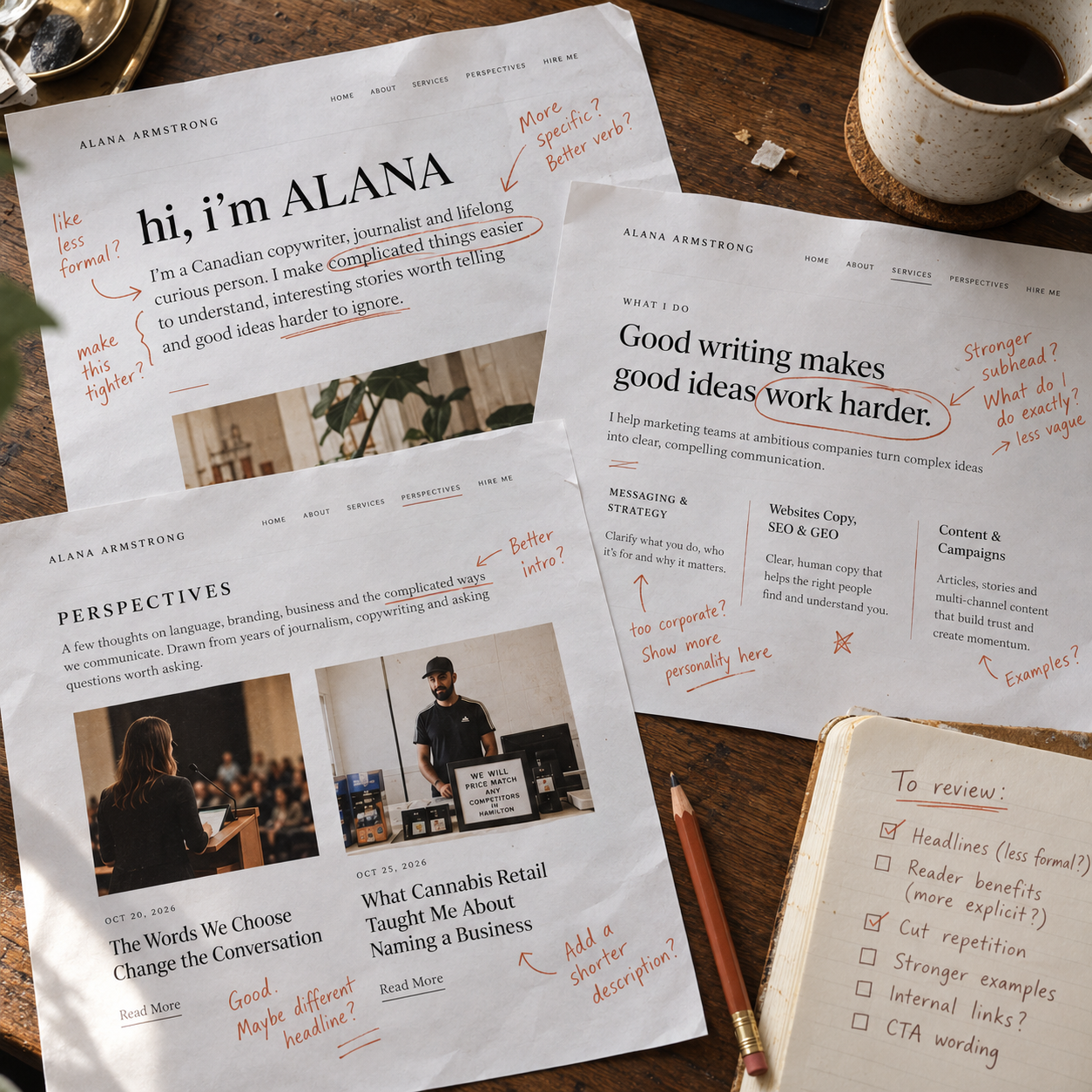
AI is changing how people find you, but some of the biggest obstacles to being understood and trusted have been hiding in plain sight for years.
I used to pitch businesses on producing more content. Three good, new blog posts in a week to help improve organic visibility, along with refreshing and republishing their best-performing content. Sometimes, that's exactly what a business needs. But the more websites I've worked on, the more I've come to question whether publishing something new should always be the first recommendation.
I've reviewed websites where FAQ headings barely resemble the questions customers might ask. Where the same selling points appear on practically every page. Where a promising link takes visitors somewhere entirely unexpected. And now, with AI changing how people research businesses and compare their options, we're talking about producing even more content for another discovery channel.
Maybe the more useful question is whether the content you already have is worth finding.
The AI search problem is also a clarity problem
In May 2026, Gartner reported that 45% of surveyed B2B buyers had used generative AI during a recent purchase, primarily to research vendors and products. Meanwhile, a 2025 Pew Research Center study found that Google users clicked a traditional search result in 8% of visits when an AI summary appeared, compared with 15% when it didn't.
These findings don't mean websites are becoming irrelevant. But if I were responsible for a company's digital presence, I'd be thinking carefully about how its information is discovered, interpreted and used. Google's own guidance for AI search continues to emphasize useful, original content and foundational SEO practices over optimization shortcuts.
Which brings me back to three problems I keep encountering, along with some practical fixes.
1. Your FAQs answer questions nobody is asking
You have an FAQ section on all the right pages, perhaps even a dedicated FAQ page with questions neatly categorized. But are they the questions people actually ask when they need to make a decision? One of the most common issues I've identified in content audits is the gap between how a business describes its expertise and how prospective customers look for help.
Consider an engineering firm with a webpage about municipal infrastructure. The company might organize its services around technical disciplines, internal terminology and project classifications. That's useful information. But someone researching a new development may have more immediate questions about approvals, timelines, costs and potential complications. The opportunity isn't necessarily to write another article. It's to connect the company's existing expertise to the decisions its audience is trying to make. Even something as simple as replacing generic FAQ headings with specific, meaningful questions can help people locate the information they need.
The fix: Review your FAQ headings and questions. Do they reflect what customers need to know, or merely the vocabulary your company uses internally?
2. You're saying the same thing everywhere
Every headline, subheading and value proposition on your website seems to say: Unbeatable quality. Innovative solutions. Decades of expertise. Superior customer service.
These might all be genuine strengths, but repeating them across a website doesn't necessarily convince people. Nor does it give them much reason to choose you over a competitor making identical claims. In audits of large, beautifully designed websites, I've identified pages that repeated the same promises without offering much additional information.
The problem isn't simply redundancy. Each page represents an opportunity to answer a different question, address a different concern or establish another reason to trust the business. When everything sounds the same, visitors have to work harder to figure out what actually matters to them. And producing more content using that same language only compounds the problem.
The fix: Give every important page a distinct communication objective. What should someone understand after reading it that they didn't understand before? If two pages make the same argument, ask whether both are necessary.
3. Your website isn't keeping its promises
I once reviewed a website where a link that appeared to lead to editorial content actually took visitors to a page about the company's technology. It sounds like a minor oversight. But every link establishes an expectation. A visitor clicks because they believe something useful awaits them on the other side.
When the destination doesn't match that expectation, the experience becomes unnecessarily confusing. I've seen similar problems on impressively rich websites with vague calls to action, poorly organized information and pages that require too much effort to navigate. These aren't exclusively SEO problems. They're communication problems. And often, identifying them doesn't require another expensive piece of software. It requires someone to walk through the website with a customer's objective in mind.
The fix: Choose a few realistic tasks your customers might want to accomplish. Follow the paths they would take. Do the links, buttons and page headings accurately describe what happens next? Where do you get stuck?
Before creating more, understand what's missing
None of this means businesses should stop publishing. Original research, educational articles, case studies and thoughtful commentary remain valuable ways to demonstrate expertise. But content production shouldn't become a substitute for examining whether the existing message is working.
AI has made it remarkably easy to produce another thousand words. It hasn't eliminated the need to decide whether those words are necessary, accurate or useful. That's where editorial judgment matters. Sometimes the right recommendation is a new article. Sometimes it's restructuring a service page, answering a neglected question or removing three paragraphs that don't contribute anything meaningful. And sometimes, the most valuable thing a copywriter can do is recommend that a business stop writing long enough to understand what it actually needs to say.
Before asking what else you should publish, ask what your audience still doesn't understand.
Before you write more, let's see what's missing.
Sometimes a fresh set of eyes is all it takes to spot the gaps in your messaging. I help businesses figure out what's working, what's confusing and what needs to change before investing in more content.